

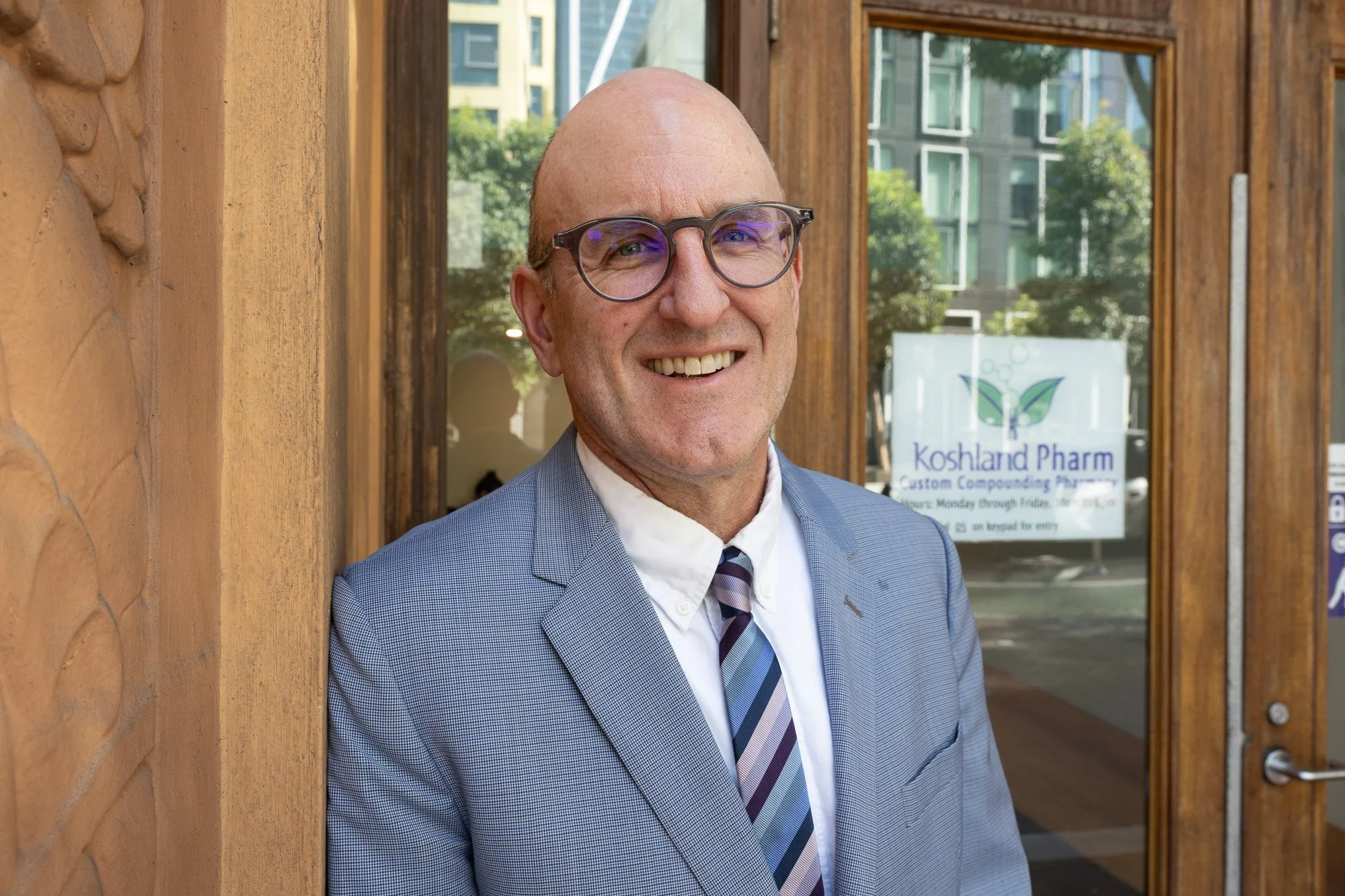
Peter Koshland, PharmD, is a graduate of Georgetown University (Chemistry BS) and the University of California at San Francisco School of Pharmacy (PharmD). He has served as an Adjunct Clinical Professor of Pharmacy at UCSF since 2010.
Peter opened his compounding pharmacy, Koshland Pharm, in 2009 in San Francisco. He and his staff work with doctors and patients on individualized compounded therapies that make a difference in the quality of patients’ day-to-day lives. Koshland Pharm is the only compounding pharmacy in San Francisco accredited by the Pharmacy Compounding Accreditation Board because of its commitment to quality.
In addition to leading Koshland Pharm, Peter trains and consults with doctors across the state of California in the areas of hormone replacement, thyroid disorders, and compounding applications for dermatology, urology, pain management, and psychiatry. He was invited to speak at the National Academies of Sciences, Engineering and Medicine in 2019. He is a current Board Member and Chair-Elect of the Alliance for Pharmacy Compounding, a national organization representing pharmacists in both 503A and 503B pharmacies.
Personalizing Male Sexual Health: Commercial and Compounded Treatment Strategies
Day & Time TBD
Male sexual health concerns—including low libido, erectile dysfunction, hypogonadism, and fertility preservation—often require individualized treatment strategies. This presentation will provide a practical overview of both FDA-approved and compounded therapies used in men’s sexual and hormonal health.
Therapies discussed will include testosterone replacement in injectable, topical, transdermal, oral, and other available formulations; clomiphene (Clomid), enclomiphene, human chorionic gonadotropin (hCG), and anastrozole for supporting testosterone optimization, fertility goals, and hormonal balance; and erectile dysfunction therapies including Bi-Mix and Tri-Mix. The presentation will compare commercially available products with customized compounded formulations, highlighting how differences in dosage form, strength, ingredients, and route of administration may influence treatment selection.
The session will emphasize practical prescribing considerations, patient selection, dosing, monitoring, safety, and how clinicians can individualize therapy based on symptoms, hormone status, fertility goals, treatment response, and patient preference.
After the presentation, participants will be able to confidently:
Compare testosterone therapy options including injectable, transdermal, and oral formulations, with emphasis on their effects on libido, erectile function, sexual satisfaction, dosing considerations, monitoring, and adverse effects.
Differentiate testosterone replacement from therapies that stimulate endogenous testosterone production, including clomiphene, enclomiphene, and human chorionic gonadotropin (hCG), and identify when these options may support sexual function while preserving fertility.
Identify the role of estradiol and aromatization in male sexual health, including appropriate use of anastrozole in selected patients with symptoms such as low libido, erectile dysfunction, or other manifestations of hormonal imbalance, while recognizing the risks of excessive estrogen suppression.
Compare Bi-Mix and Tri-Mix for erectile dysfunction, including their components, mechanisms of action, patient selection, titration, injection technique, expected response, storage, adverse effects, and management of priapism.
Evaluate FDA-approved and compounded treatment options for male sexual dysfunction, including when individualized dosage forms, strengths, or combinations may improve erectile function, libido, treatment tolerability, or adherence.
Develop an individualized treatment approach to male sexual dysfunction by integrating libido, erectile quality, morning erections, orgasm and ejaculation, testosterone and estradiol status, fertility goals, comorbidities, medications, and patient preferences.
ON DEMAND: When the Medication Is the Problem: Recognizing and Managing Drug-Induced Sexual Dysfunction
Day & Time TBD
Low libido, erectile dysfunction, impaired arousal, delayed orgasm, anorgasmia, and vaginal dryness are common concerns that may be caused or worsened by medications. Because these adverse effects are often underrecognized, patients may undergo unnecessary testing or treatment without addressing the underlying pharmacologic contributor.
This presentation will review medications commonly associated with sexual dysfunction in men and women, including selective serotonin reuptake inhibitors (SSRIs), serotonin-norepinephrine reuptake inhibitors (SNRIs), antipsychotics, antihypertensives, opioids, 5-alpha-reductase inhibitors, hormonal contraceptives, antiandrogens, and other frequently prescribed agents. The session will explore the mechanisms by which medications can affect libido, erectile function, arousal, lubrication, orgasm, testosterone, prolactin, and other hormonal pathways.
Attendees will learn how to identify medication-induced sexual dysfunction, differentiate it from primary hormonal, vascular, psychological, and relationship-related causes, and consider practical management strategies including medication review, dose adjustment, substitution, timing strategies, and appropriate adjunctive therapies.
After the presentation, participants will be able to confidently:
Identify commonly prescribed medications associated with sexual dysfunction in men and women, including antidepressants, antipsychotics, antihypertensives, opioids, hormonal therapies, 5-alpha-reductase inhibitors, and antiandrogens.
Explain how medications can contribute to low libido, erectile dysfunction, impaired arousal, vaginal dryness, delayed orgasm, and anorgasmia through serotonergic, dopaminergic, adrenergic, vascular, hormonal, and prolactin-mediated pathways.
Differentiate medication-induced sexual dysfunction from other common contributors including hypogonadism, menopause, cardiovascular disease, diabetes, depression, anxiety, and relationship factors.
Evaluate a patient’s medication list for potential contributors to sexual dysfunction and recognize patterns related to medication initiation, dose escalation, duration of therapy, and polypharmacy.
Compare management strategies for medication-associated sexual dysfunction, including dose modification, medication substitution, altered dosing schedules, and selected adjunctive treatment options.
Develop an individualized approach to sexual side effects that balances sexual health, the indication for the medication, treatment efficacy, safety, and patient priorities.